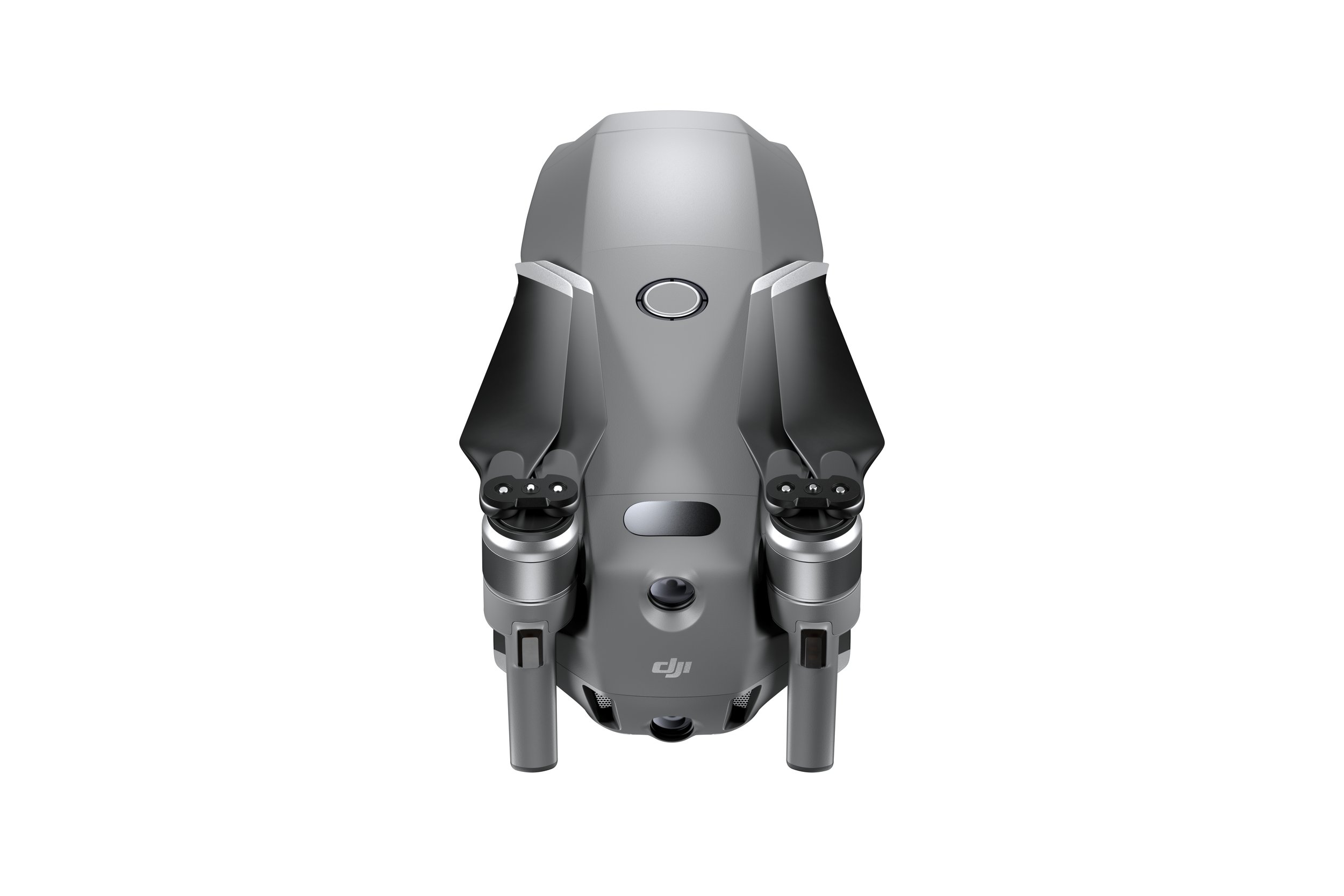
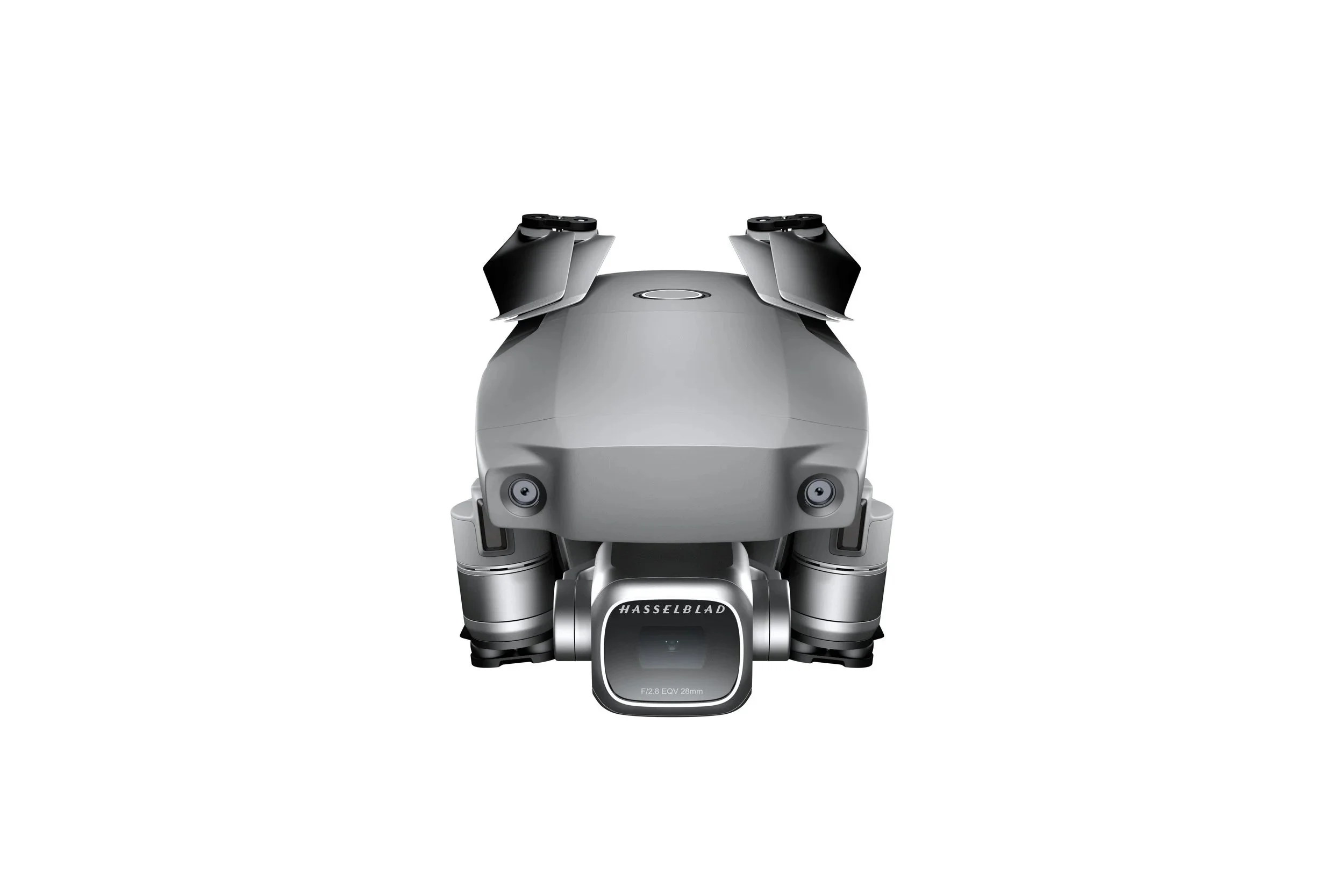
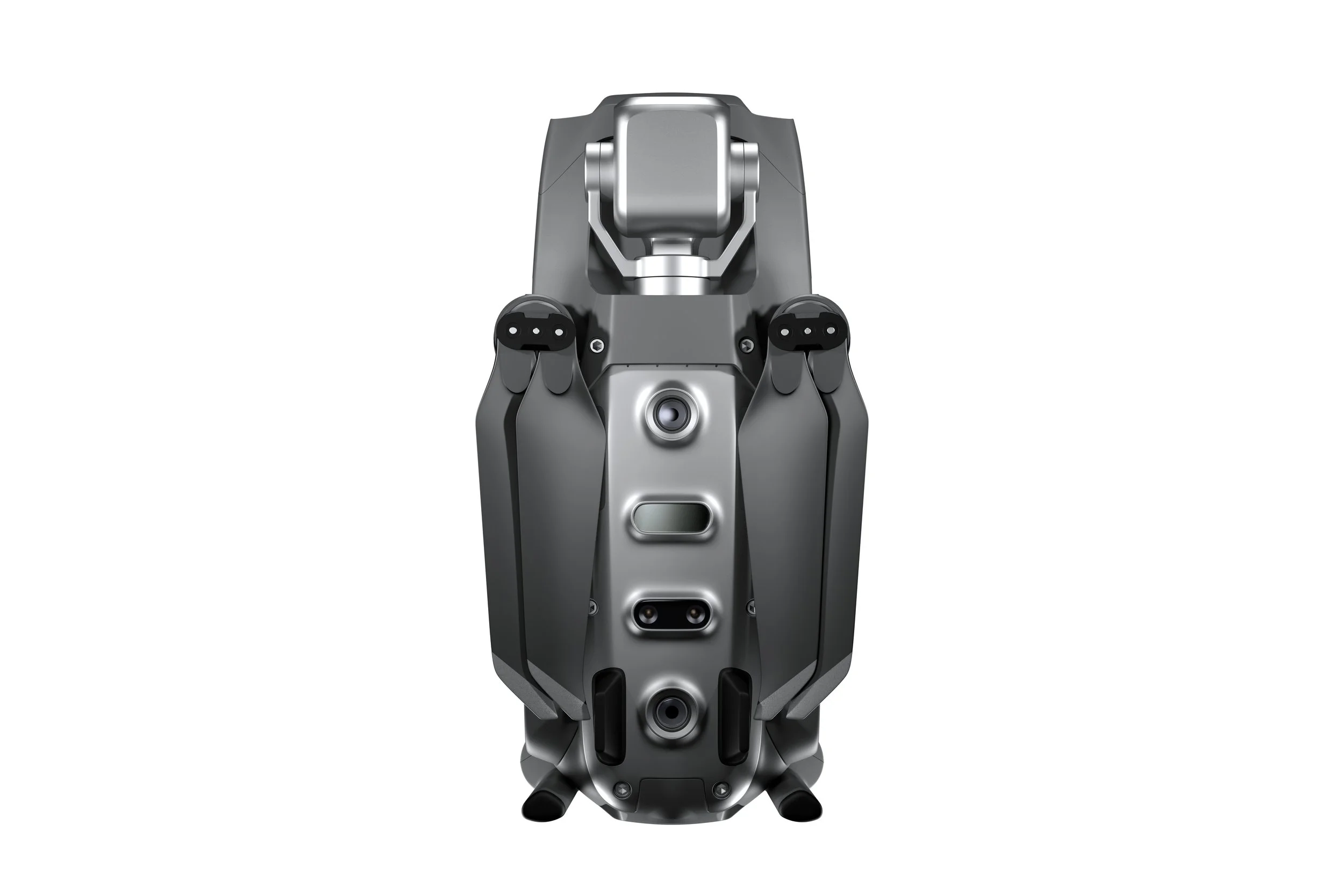
DJI Mavic 2 Pro | VRED Rendering Exercise |
DJI Mavic 2 Pro | VRED Rendering Exercise |
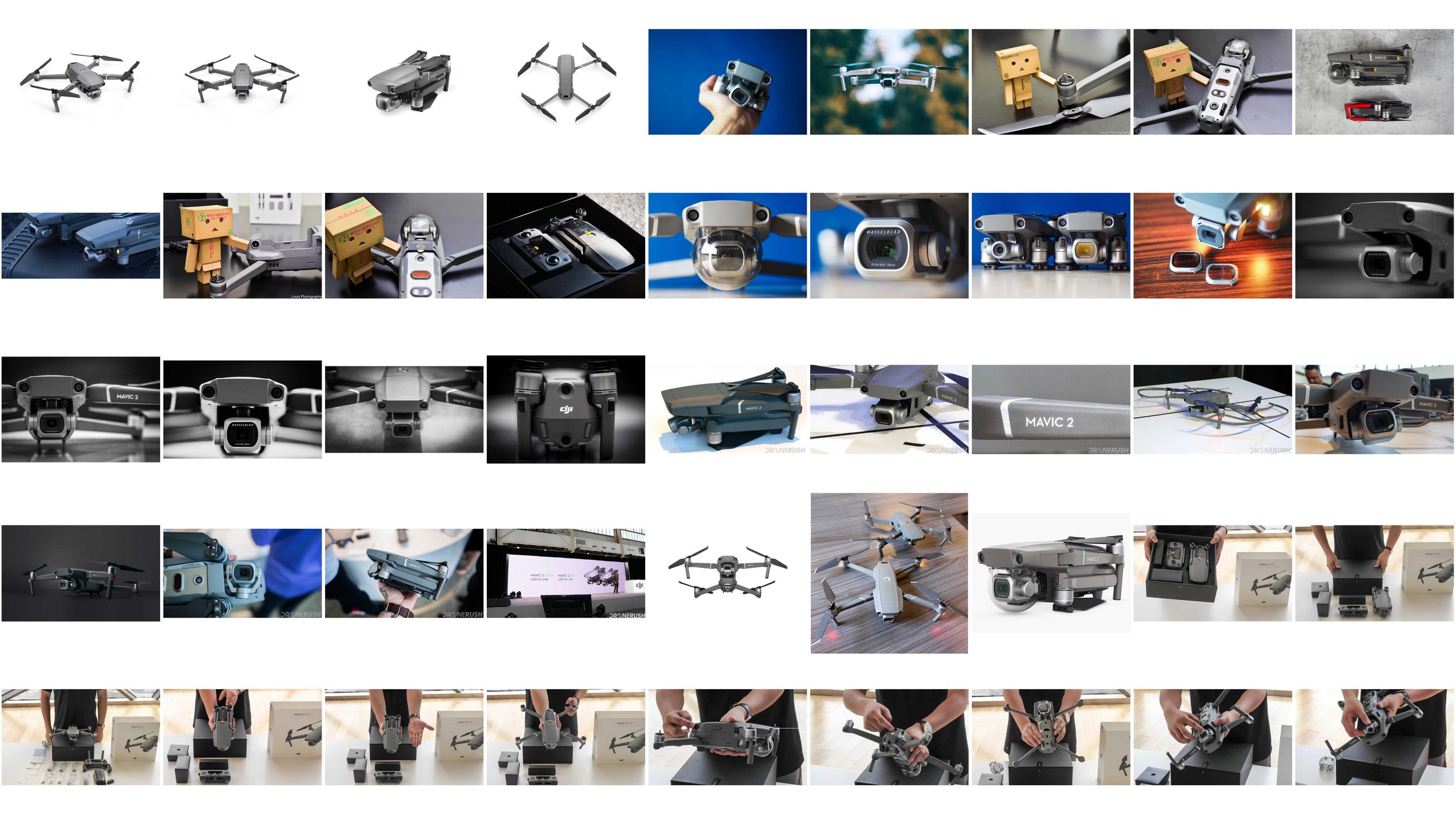
Reference
Without physical material samples available, a thorough contact sheet was assembled first, consolidating reference for colors, construction materials, surface textures, decal placement, and light behavior across the product's surfaces.
Model Prep
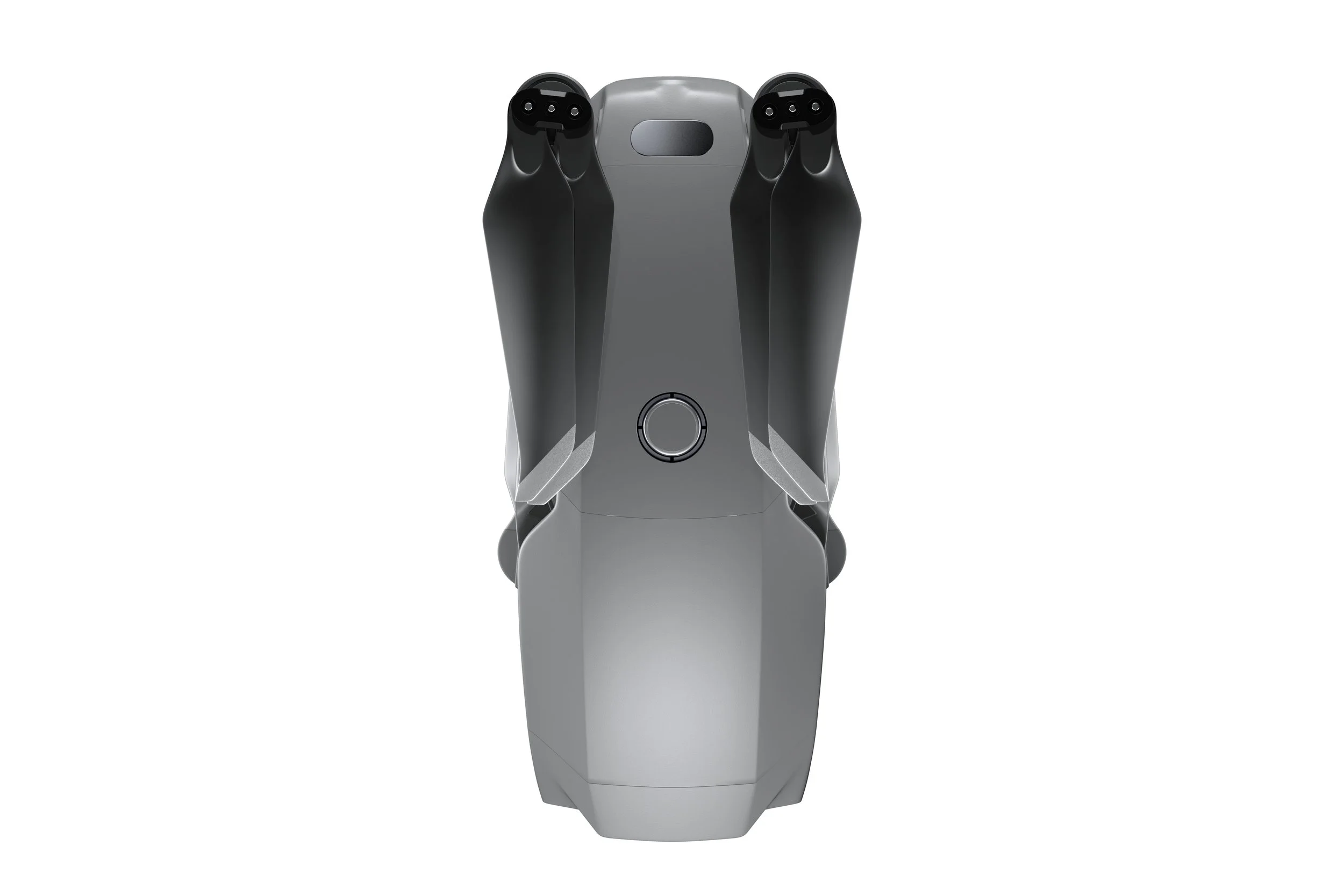
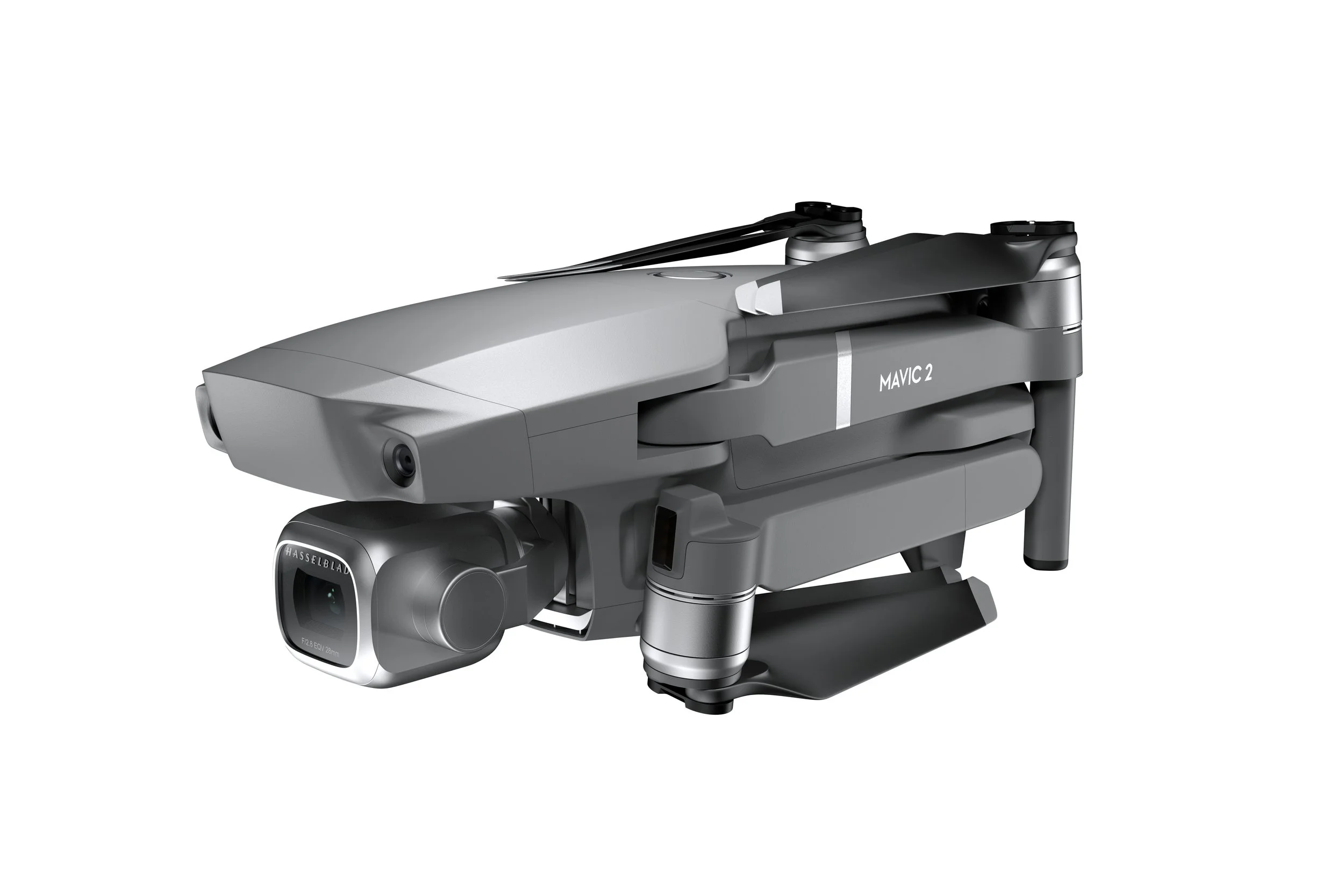
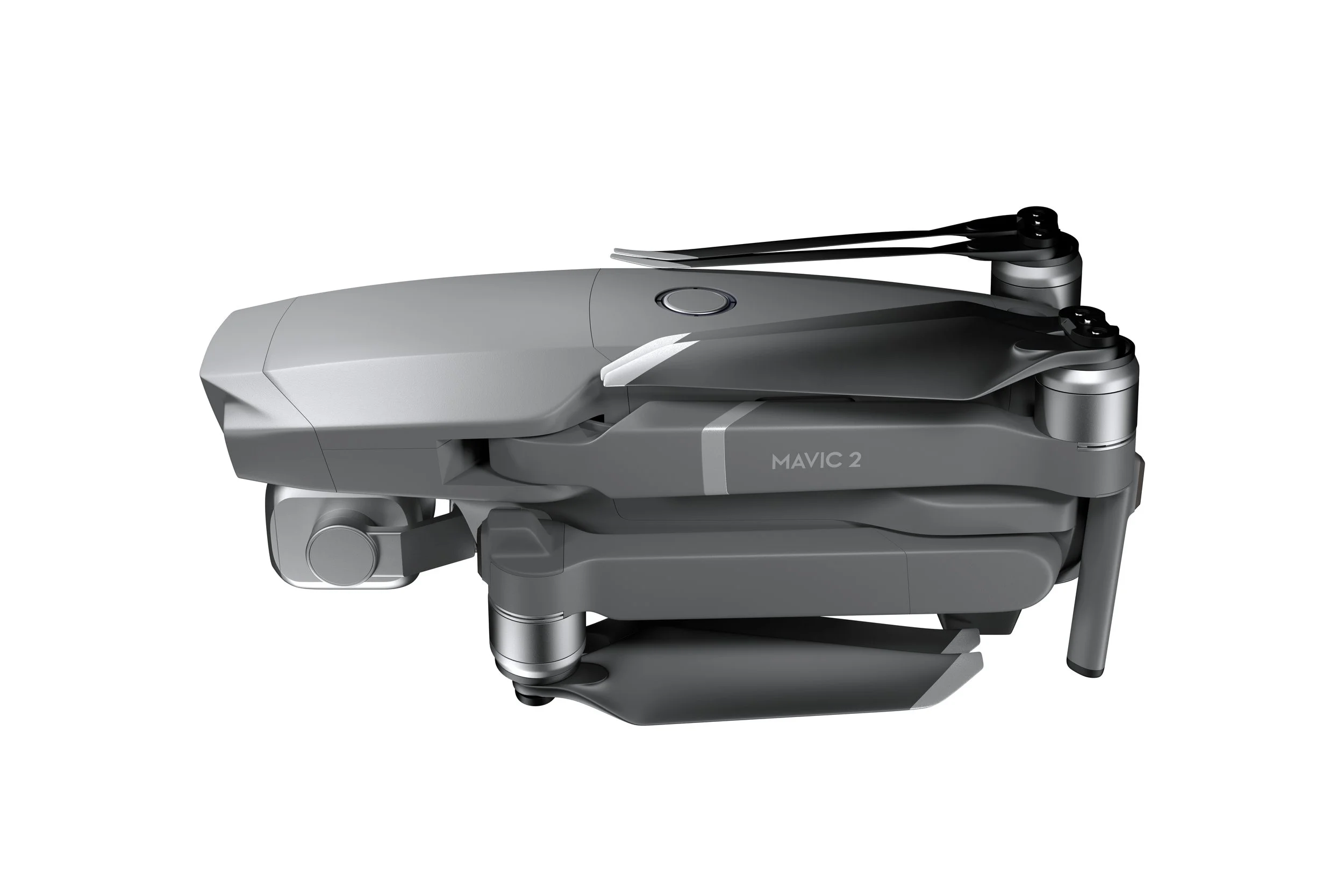
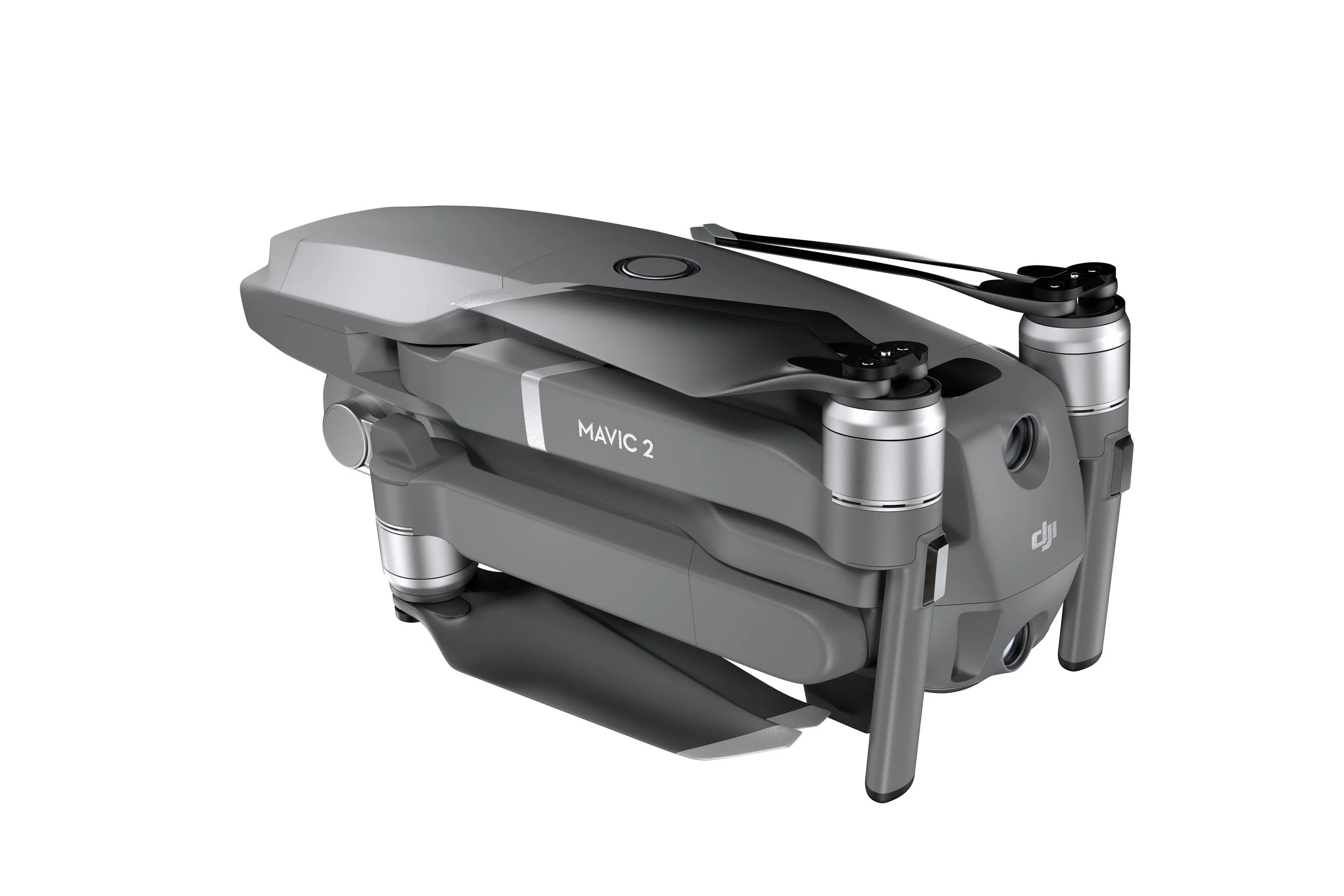
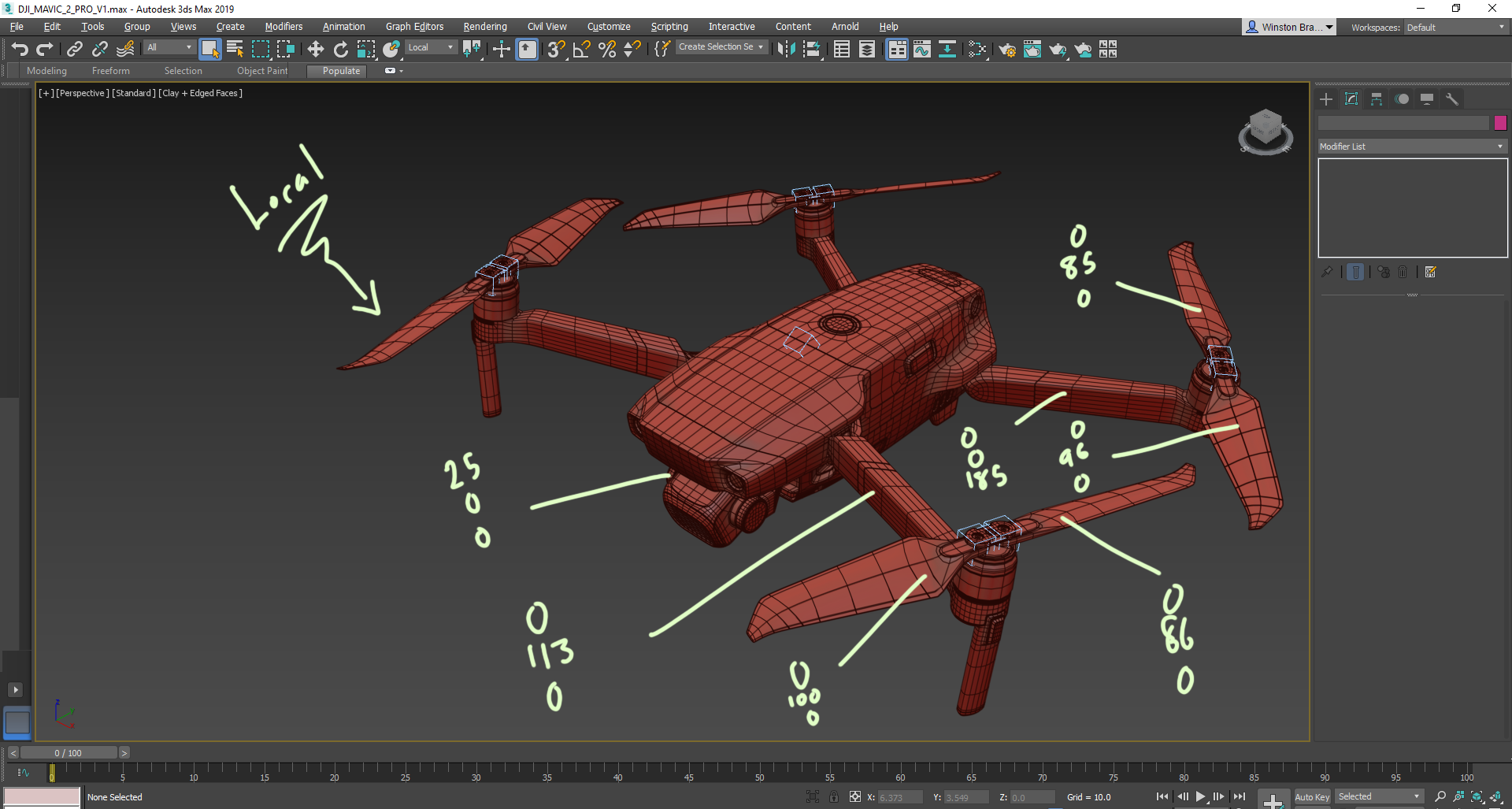
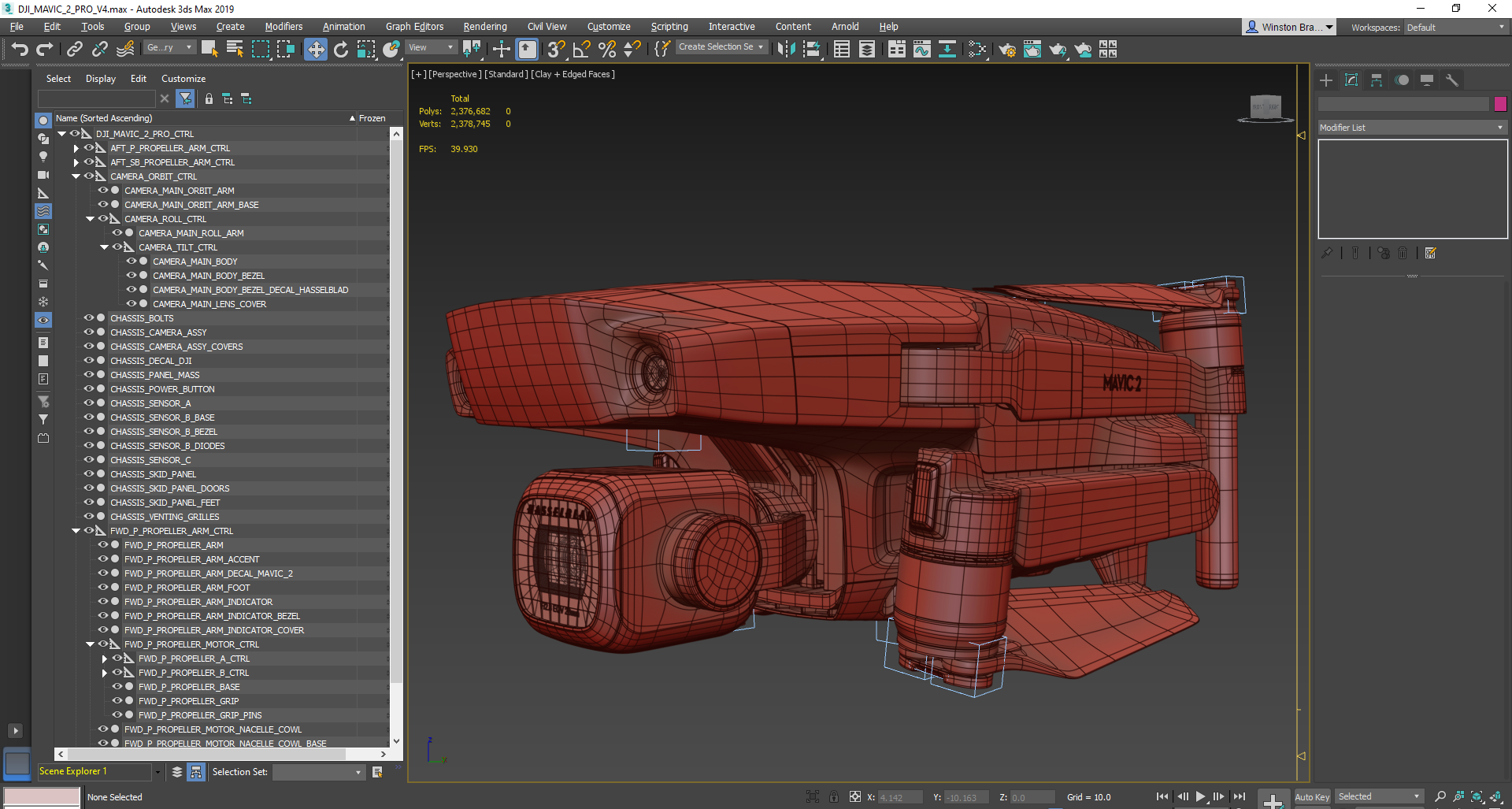
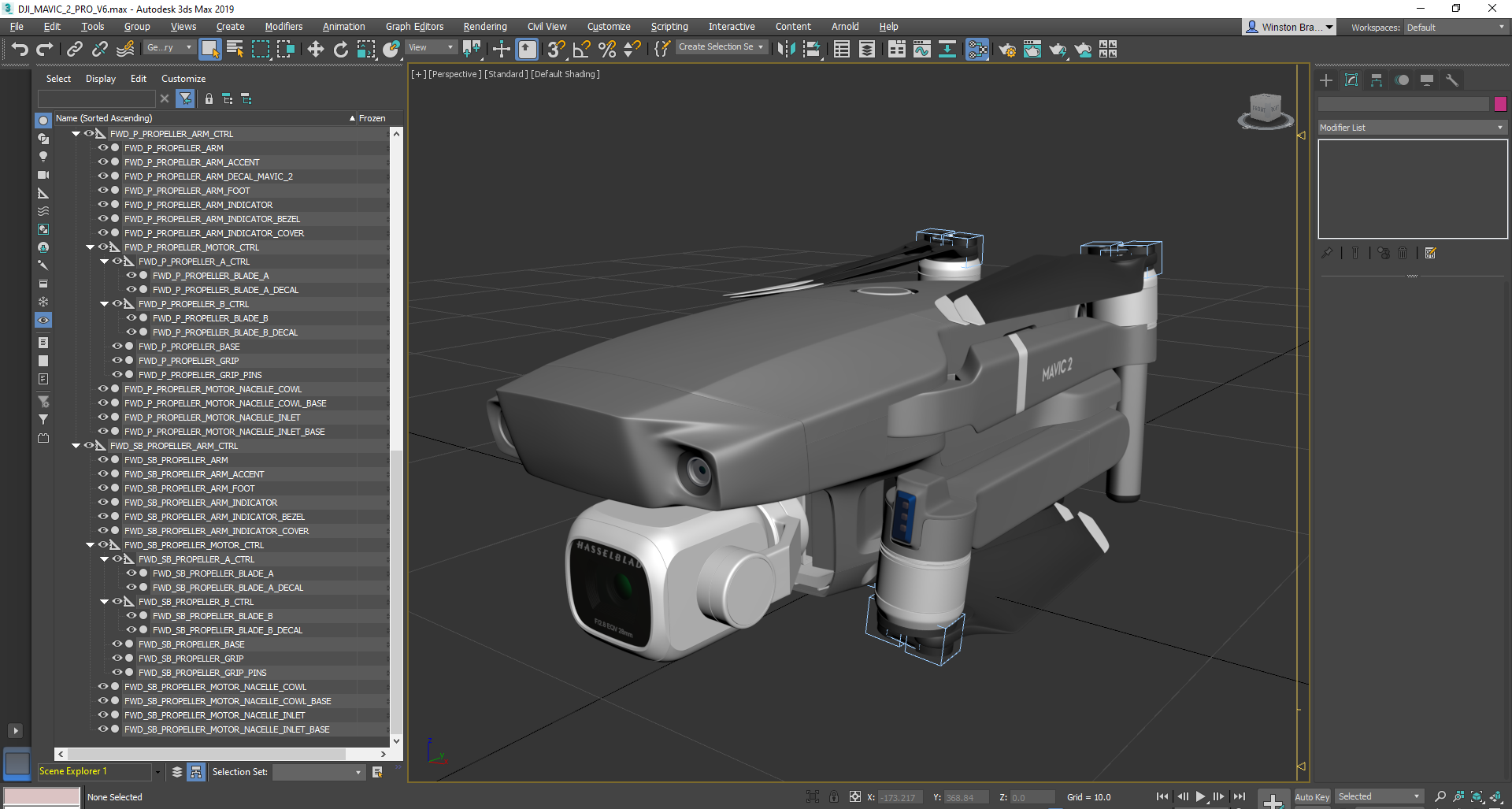
Handled in Autodesk 3DS Max and MoI3D. Work included UV cleanup, geometry modeling for branded text elements across the body, propeller arm rigging for the folded position, camera articulation, and thorough material tagging before import.
Model Import
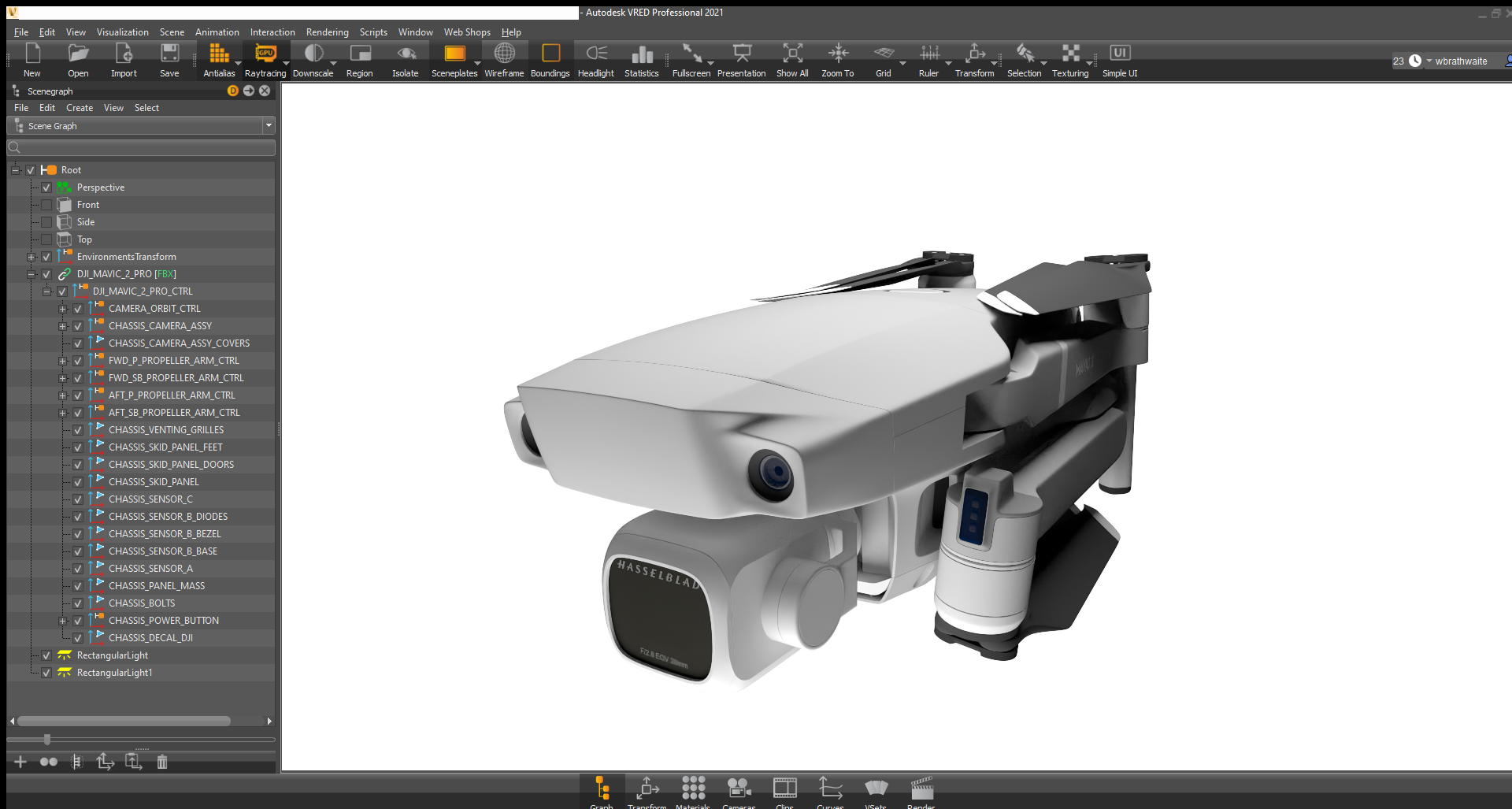
Data was brought into VRED via FBX to preserve scene hierarchy, component labeling, transforms, and surface integrity.
Camera Selection
Treated as a deliberate creative step rather than an afterthought. Early test renders were used to evaluate how the model's surfaces responded to light before locking in final angles, with the turntable also serving as a surface integrity check.
Materials & Textures
The Mavic 2 Pro's surface variety was the central challenge: matte and semi-gloss plastics, metal-effect finishes, translucent elements, and micro-facet texturing across nearly every panel. Each material required individual treatment. Web-sourced reference was combined with hand-painted texture work in Adobe Photoshop to get surface roughness and light scatter reading accurately.
Lighting
Built per camera angle using disk lights at 6700K. Cone angle controls kept illumination defined rather than diffuse, and custom light textures were used in place of IES profiles to shape reflections across glossy surfaces.
Render
Final stills and turntable animation rendered overnight. Animation frames were assembled and output to H.265 MP4 in Adobe Premiere Pro.